10040 Daniels Interstate Ct Fort Myers, FL 33913
Describe what you noticed and when it happened. A slow start, a warning message, or a car that sat for a while are all useful details. That context helps the inspection start in the right place.
The most obvious sign is a car that will not start, but most batteries give you signals before it gets to that point. A slow or labored crank when you turn the key is one of the more reliable early indicators. So is a battery warning light, any message referencing low voltage, or electrical behavior that feels slightly off, lights flickering, accessories responding more slowly than usual, or the stereo resetting after a short trip.
Porsche models with a lot of onboard electronics can be more sensitive to voltage drops than older or simpler vehicles. That means a battery that is technically still working can still cause issues in the car’s systems before it fails outright. If something feels inconsistent and you cannot pin down a cause, the battery is a reasonable place to start.
If a warning message appeared and then cleared on its own, note exactly what it said if you can. That detail helps the service team know whether it is battery-related or points to something else.
Heat is harder on a battery than cold is, and Southwest Florida has plenty of it. Extended exposure to high temperatures accelerates the internal wear of a battery, which is why a Porsche that lives outside in Fort Myers year-round may go through batteries faster than the same model parked in a garage up north.
The other factor is how the car is used. A battery needs regular driving to stay properly charged. Short trips around Gateway, Cape Coral, or Estero do not always give the charging system enough time to do its job fully. Over weeks and months, that adds up.
For owners who split their time between Fort Myers and somewhere else, this is especially relevant. A Porsche sitting in a garage for several months with no driving and no battery tender connected is a very common reason for a dead battery on return. It is not a defect. It is just what happens when a modern vehicle sits without any maintenance of its charge level.
Testing and replacement are two separate things, and one does not automatically lead to the other. A battery test measures how well the battery holds a charge and whether it can deliver the power the car needs to start reliably. A battery that tests weak but has not failed yet may still have time left, or it may be at the point where replacement makes more sense than waiting.
The recommendation should come from what the test actually shows, not from guessing based on age or symptoms alone. Some batteries fail well before their expected lifespan in Florida conditions. Others hold up longer than you would expect. Testing is the only way to know where yours stands.
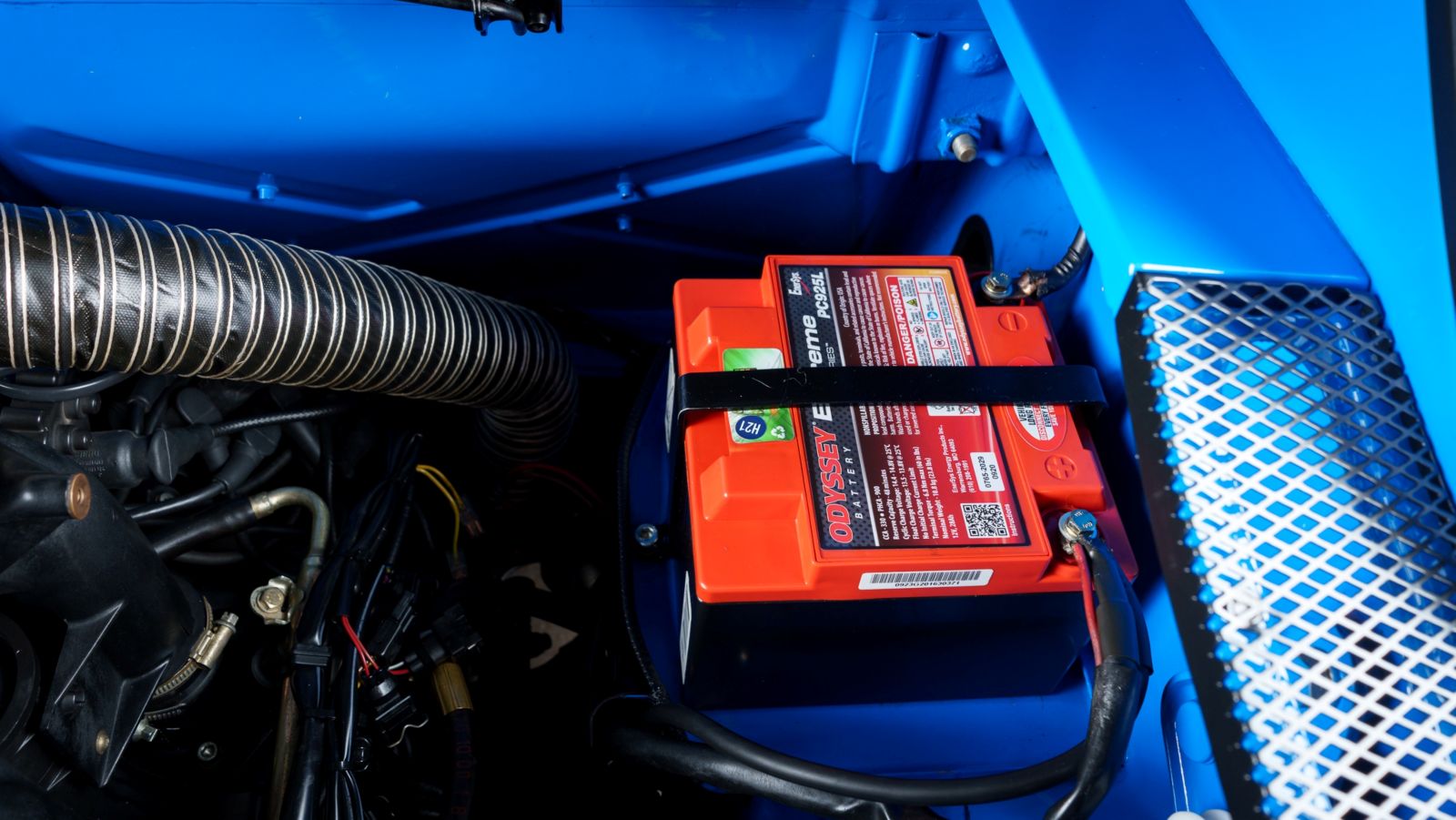
If replacement is needed, a Porsche battery replacement done with the correct part matters more than it might on some other vehicles. Porsche models often require battery registration with the vehicle’s management system after a swap, which is part of what a proper service visit handles.
A battery tender is a low-output charger that keeps a battery at a stable charge level without overcharging it. It is not the same as a standard battery charger. It monitors the battery and adjusts automatically, which makes it safe to leave connected for weeks or months at a time.
For Porsche owners in Fort Myers who travel for part of the year, a battery tender is one of the more practical things you can do for a car that is going to sit. Plugging it in before you leave and unplugging it when you return costs very little and can be the difference between a car that starts normally and one that needs a jump or a new battery.
It is also useful for daily drivers that mostly do short trips. If your Porsche rarely gets a sustained drive, a tender connected overnight occasionally can help offset what the short-trip pattern does to charge levels over time. If you are not sure whether a tender makes sense for how you use the car, it is a good question to raise at your next service visit.
If you are not sure what applies, describing the situation when you book is enough to get the inspection pointed in the right direction.
A battery test is a straightforward addition to any service visit. Schedule when you are ready and mention the battery if you want it included.
You do not need to arrive with a clear answer. Describing what you noticed and when is enough. From there, the battery can be tested to measure its current condition and whether it is delivering the output the car needs.
If replacement is needed, a proper Porsche battery replacement involves more than swapping the part. Many Porsche models require the new battery to be registered with the vehicle’s electronics so the charging system knows how to manage it correctly. Skipping that step can affect how the car charges and monitors the battery going forward, which is one reason it matters where you have the work done.
Battery service also pairs well with other maintenance. If you are already coming in for an oil change or tire rotation, adding a battery test takes very little extra time and gives you a more complete picture of where the car stands.
If something felt off when you started the car, or if the battery has not been tested in a while, scheduling a visit is the straightforward next step. This is especially true if the car has been sitting, if you are coming back to Fort Myers after time away, or if the battery is getting up there in age.
When you are ready, schedule online or check current service specials first. Either way, include a short note about what you noticed and the team can take it from there.
Pick a time and add a short note about what you have been noticing. Whether it is a test, a replacement, or just a question about battery tenders, the team can help point you in the right direction.